
Land of the Long White Cloud: Adventure, Wonder & Soul in New Zealand
From bungee jumps over Queenstown's gorges to the mist-shrouded fjords of Milford Sound, the rolling hills of Hobbiton, and the living traditions of Māori culture — New Zealand is a journey that rewrites what travel can feel like.
Where the World Feels Brand New
There are places on earth that don't just impress you — they rearrange you. New Zealand is one of them. Stretched across two main islands at the bottom of the Pacific, Aotearoa (the Māori name meaning Land of the Long White Cloud) is a country of staggering contrasts: glaciers and geothermal pools, ancient rainforests and volcanic plateaus, quiet sheep farms and roaring rivers. It is a place where the landscape feels mythological, because in many ways, it is.
I arrived in Auckland on a grey morning, jet-lagged and wide-eyed, and within 48 hours I understood that New Zealand operates on its own frequency. The air is different here — cleaner, sharper, charged with possibility. Over three weeks, I travelled the length of the South Island and dipped into the North, chasing adventure, beauty, and meaning at every turn. What I found exceeded every expectation I had carried across the Pacific.
Queenstown: The Adventure Capital of the World
Queenstown sits on the edge of Lake Wakatipu, cradled by the jagged Remarkables mountain range, and it wears its reputation as the world's adventure capital with complete confidence. The town itself is compact and lively — good coffee shops, excellent restaurants, a buzzing waterfront — but everyone here is really just waiting for their next adrenaline fix.
I started with bungee jumping at the Kawarau Bridge, the birthplace of commercial bungee jumping. Standing on that platform 43 metres above the turquoise river, I understood for the first time why people describe the moment before a jump as a kind of meditation. Everything narrows to a single point. Then you fall, and the world explodes back into colour.
The following morning I went skydiving over the Remarkables. Freefalling at 200 km/h from 15,000 feet, with the Southern Alps spread below like a crumpled white tablecloth and Lake Wakatipu glittering in the distance, is an experience that defies language. It is not fear, exactly. It is something closer to awe made physical.
Jet boating on the Shotover River rounded out my Queenstown adventure trifecta. The Shotover Jet boats hurtle through narrow canyon walls at 85 km/h, spinning 360 degrees with centimetres to spare. It is gloriously, absurdly fun — the kind of fun that makes you laugh out loud involuntarily and grip the handrail with both hands.
- Kawarau Bridge Bungee — The original commercial bungee site; 43 m above the river
- NZONE Skydive — Tandem jumps from 9,000–15,000 ft over the Remarkables
- Shotover Jet — High-speed jet boating through the Shotover River canyons
- Nevis Swing — The world's largest swing, 160 m above the Nevis Valley
"Queenstown doesn't ask whether you're brave enough. It simply assumes you are, and then it shows you that you were right."
Milford Sound: A Fjord at the Edge of the World
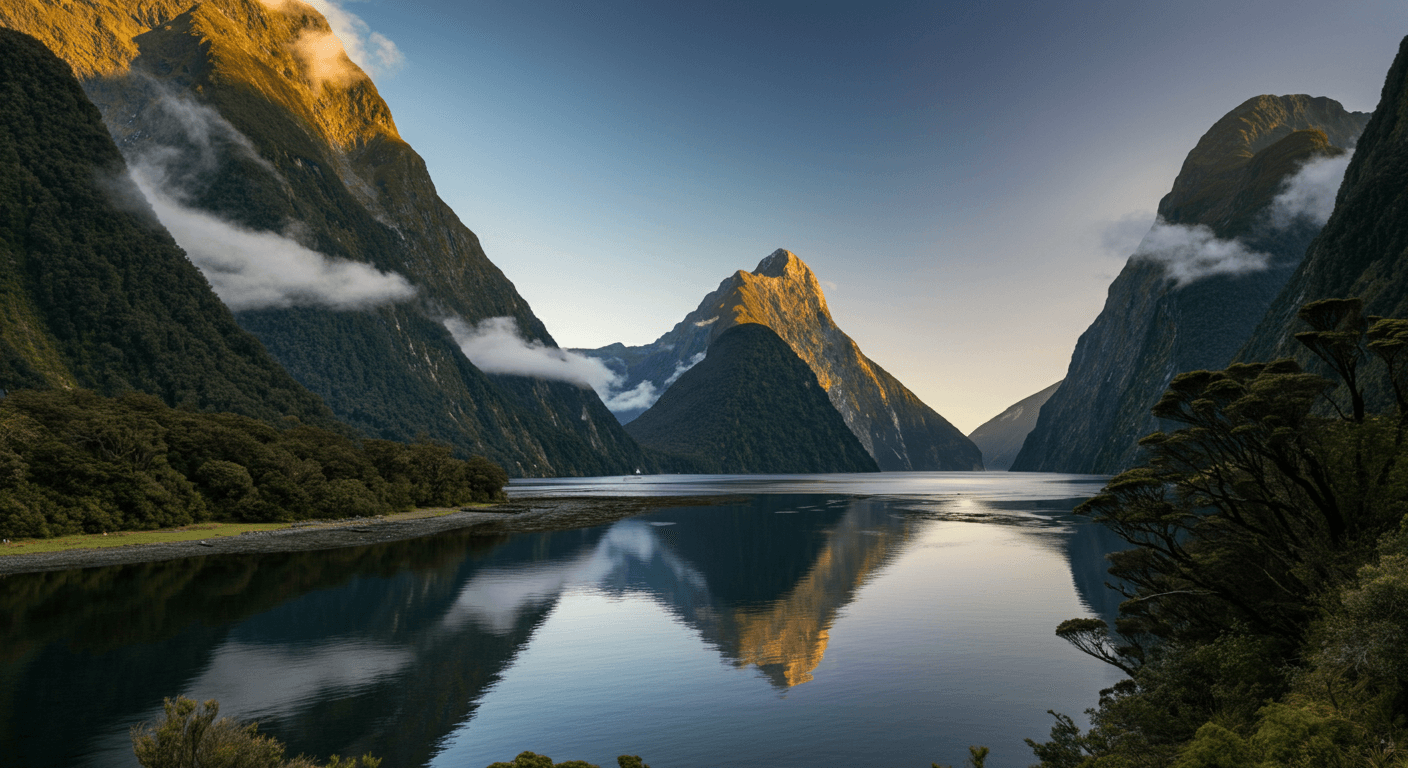
If Queenstown is New Zealand's heartbeat, Milford Sound is its soul. Located deep within Fiordland National Park — a UNESCO World Heritage Site — Milford Sound is technically a fjord, carved by glaciers over millions of years into sheer walls of dark rock that plunge straight into black water. It is one of the wettest places on earth, receiving up to 7 metres of rainfall a year, and on the day I arrived, it was living up to its reputation.
The rain, it turns out, is part of the magic. Hundreds of temporary waterfalls cascade down the cliff faces after heavy rain, joining the permanent falls — Stirling and Bowen — that thunder year-round. The mist clings to the peaks of Mitre Peak, the fjord's iconic 1,692-metre sentinel, softening its edges and lending the whole scene an otherworldly, dreamlike quality.
I took an overnight cruise, which I cannot recommend highly enough. As the day-trippers departed and the fjord fell quiet, the water turned to glass. Fur seals lounged on sun-warmed rocks. A pod of bottlenose dolphins surfaced alongside the bow. At dusk, the sky turned shades of amber and violet that no photograph can fully capture. Lying on the deck in the dark, watching the Milky Way arc overhead with no light pollution for hundreds of kilometres, I felt genuinely small — and genuinely grateful for it.
- Book an overnight cruise to experience the fjord after day-trippers leave
- Visit after rain for the most dramatic waterfall displays
- Look for fur seals near Seal Rock and dolphins near the Tasman Sea entrance
- The Milford Track (4 days, 53 km) is one of New Zealand's Great Walks
Hobbiton: Stepping Into the Shire
I'll admit I felt slightly self-conscious about how excited I was to visit Hobbiton. I am a grown adult. And yet, turning the corner on the rolling green hills of the Alexander family farm near Matamata, and seeing those round hobbit doors set into the hillside with their little gardens and washing lines and smoking chimneys, I felt something I can only describe as pure, uncomplicated joy.
The Hobbiton Movie Set was built for Peter Jackson's Lord of the Rings and Hobbit trilogies on a working sheep farm in the Waikato region of the North Island. Unlike the temporary sets used elsewhere in the films, Hobbiton was constructed to be permanent, and the level of detail is extraordinary. Each hobbit hole has its own personality — different door colours, different garden plantings, different props chosen to suggest the character of its fictional inhabitant.
The tour ends at the Green Dragon Inn, where you're handed a complimentary pint of Southfarthing ale (or ginger beer, if you prefer) and invited to sit by the fire. Outside, the mill wheel turns over the pond. The late afternoon light turns golden. For a moment, the boundary between fiction and reality becomes pleasantly blurry, and you understand exactly why Tolkien's world has meant so much to so many people for so long.
"In a hole in the ground there lived a hobbit." Standing in the Shire, you finally understand why that sentence has enchanted readers for nearly a century.
Māori Culture: The Living Heart of Aotearoa
No journey through New Zealand is complete without engaging seriously and respectfully with Māori culture — not as a tourist attraction, but as the living, breathing foundation of the country's identity. The Māori are the tangata whenua, the people of the land, and their traditions, language (te reo Māori), and worldview are woven into every aspect of New Zealand life.
I spent two days at Tamaki Māori Village near Rotorua, one of the most authentic cultural experiences available to visitors. The evening began with a pōwhiri — a formal welcome ceremony — in which our group was challenged by a warrior performing the wero (ritual challenge) before being invited onto the marae (meeting ground). The weight of the protocol, the care with which it was explained and enacted, made clear that this was not performance for its own sake. It was the transmission of something precious.
The haka is perhaps the most internationally recognised element of Māori culture, and experiencing it live — not at a rugby match, but in its proper ceremonial context — is transformative. The haka is not simply a war dance. It is a declaration of identity, a celebration of life, an expression of the connection between the living and the ancestors. When a group of men perform it with full commitment, the ground seems to vibrate.
The evening concluded with a hāngī feast — food slow-cooked in an earth oven using heated stones. Lamb, chicken, kumara (sweet potato), and vegetables, all infused with a subtle earthiness that no conventional cooking method can replicate. Eating together on the marae, under the stars, felt like a privilege.
- Tamaki Māori Village (Rotorua) — Evening cultural experiences with hāngī dinner
- Te Papa Tongarewa (Wellington) — New Zealand's national museum, with outstanding Māori collections
- Waitangi Treaty Grounds (Bay of Islands) — Site of the 1840 Treaty of Waitangi, New Zealand's founding document
- Learn a few words of te reo Māori — locals deeply appreciate the effort
Closing Reflections and Travel Tips
New Zealand rewards the traveller who slows down. It is tempting, given the density of extraordinary experiences on offer, to rush from one highlight to the next. Resist that temptation. The country's greatest gifts are often found in the pauses — a conversation with a farmer on a back road, a dawn walk through a beech forest, a quiet hour watching the light change over a lake.
Three weeks felt both too long and not nearly enough. I left with a full memory card, a slightly battered passport, and a persistent, low-level grief that I was no longer there. That, I think, is the highest compliment you can pay a place.
- Best time to visit: December–February (Southern Hemisphere summer) for warmth and long days; June–August for skiing in Queenstown
- Getting around: Hire a campervan for the South Island — freedom camping is well-regulated and the scenery from the road is half the experience
- Book ahead: Milford Sound cruises, Hobbiton tours, and Great Walks fill up months in advance
- Respect the land: Follow Leave No Trace principles; New Zealand's ecosystems are fragile and irreplaceable
- Currency: New Zealand Dollar (NZD); card payments are accepted almost everywhere
- Driving: Drive on the left; roads in Fiordland and the West Coast can be narrow and winding — allow extra time
Aotearoa will ask something of you — your comfort, your assumptions, your sense of what is possible. Give it freely. What you receive in return is worth every moment of the journey.
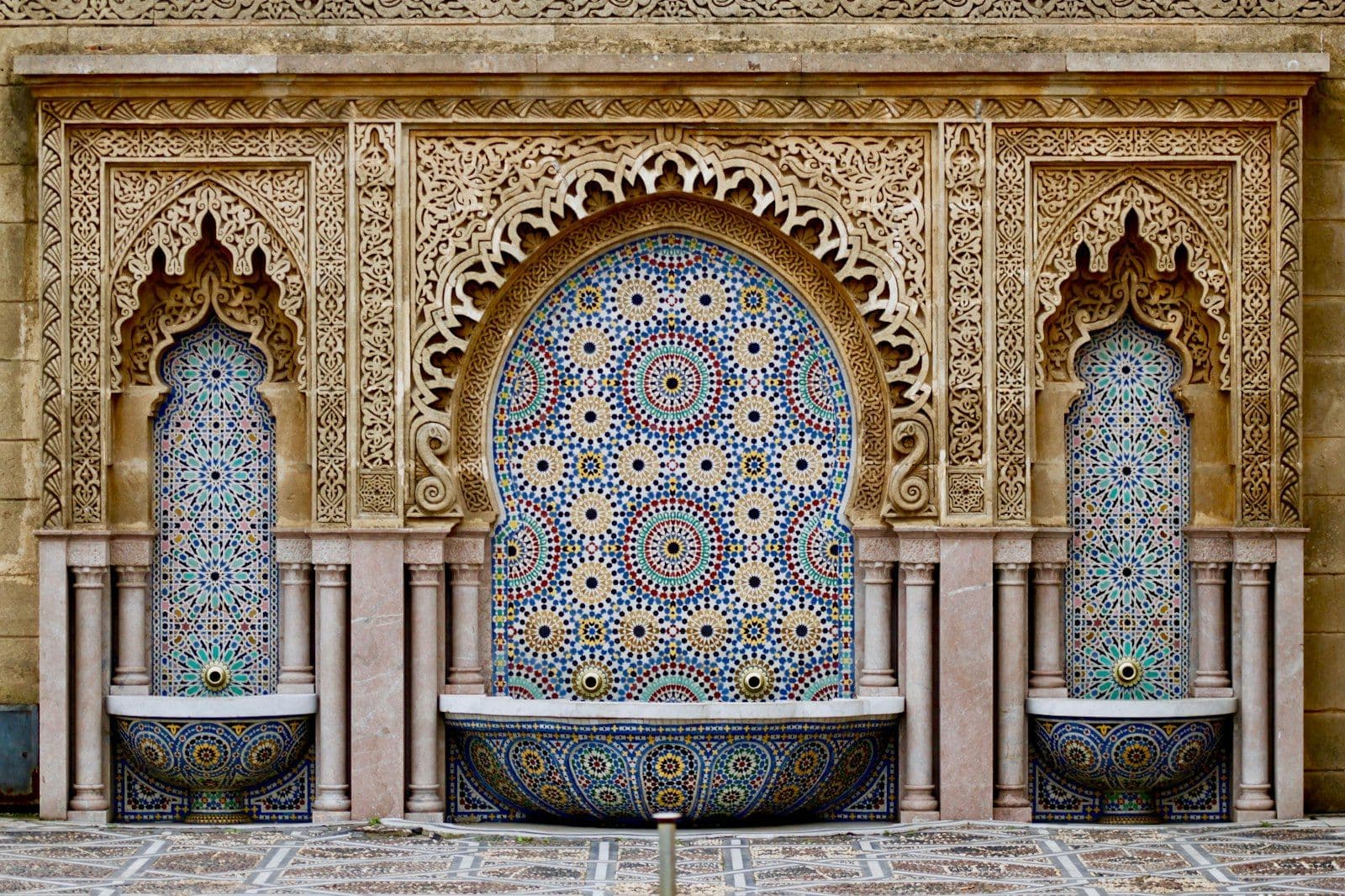 Company NewsLost in Morocco: Medinas, Deserts, and the Magic of ChefchaouenFrom the labyrinthine souks of Marrakech to the star-dusted silence of the Sahara, and the dreamy blue alleys of Chefchaouen — Morocco is a journey that rewires your senses. Here's everything you need to know before you go.
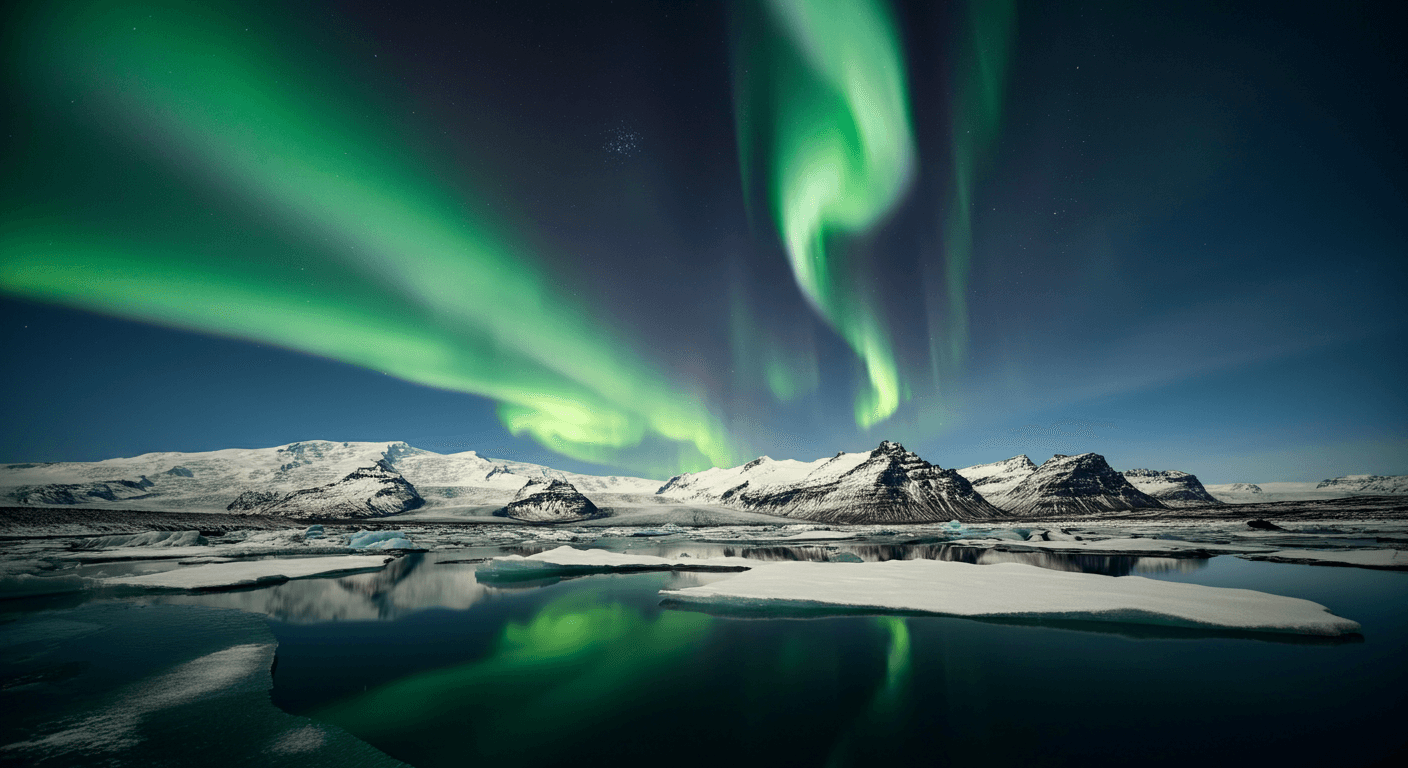 MediaIceland Unveiled: Chasing Northern Lights, Glaciers, and the Golden CircleFrom the electric dance of the Aurora Borealis to thundering waterfalls and ancient glaciers, Iceland is a land of raw, untamed beauty. Join us on an unforgettable journey through fire, ice, and the legendary Golden Circle.