
Land of the Rising Sun: A Journey Through Japan's Temples, Streets & Sakura
From Tokyo's electric neighborhoods to Kyoto's ancient temples, and from sizzling street food stalls to clouds of cherry blossoms — Japan is a journey that rewires the senses. Here's how it unfolded.
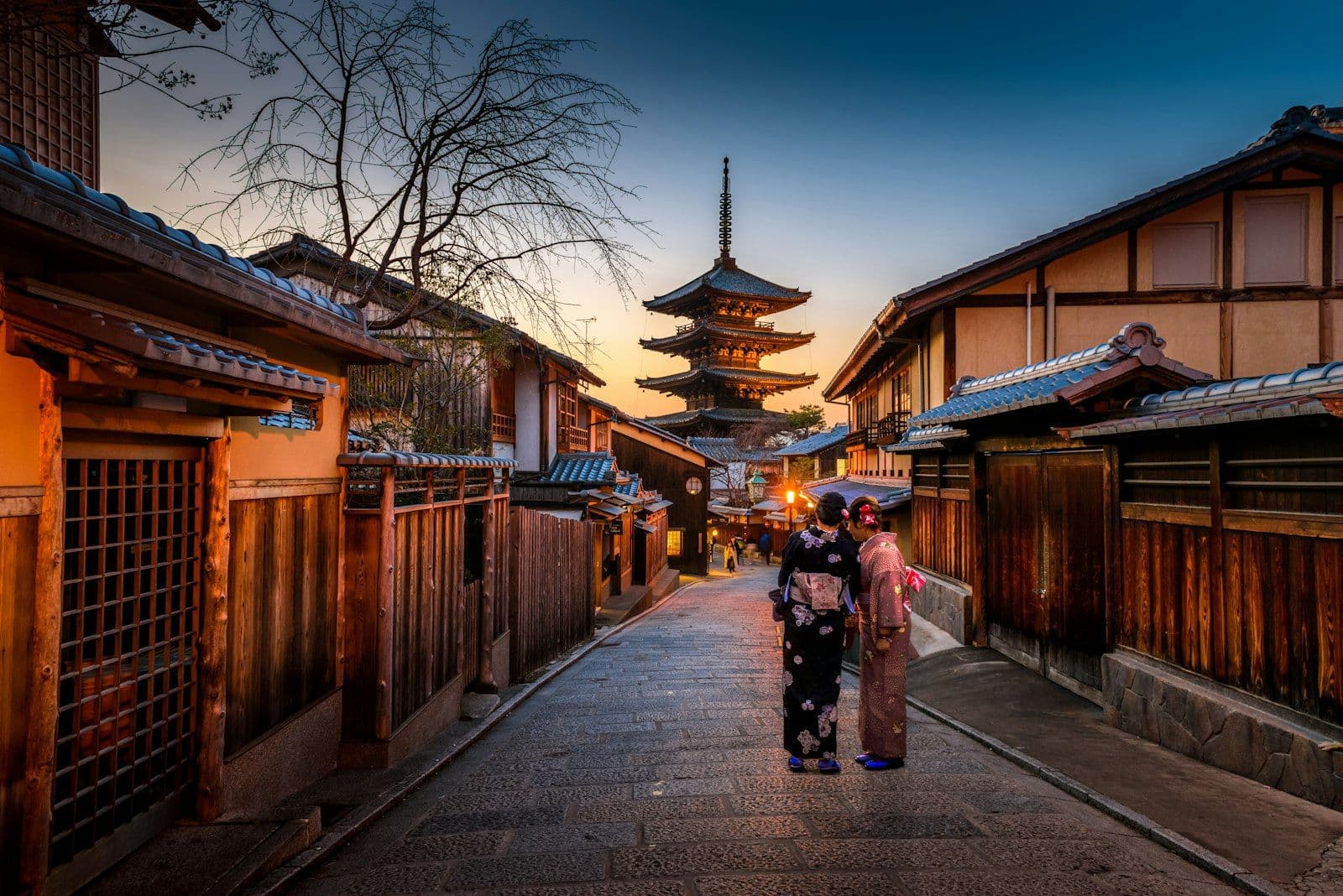
Arrival: Stepping Into Another World
The moment the Narita Express slides out of the airport and into the Tokyo sprawl, you understand that Japan is unlike anywhere else on earth. The landscape shifts from industrial outskirts to dense residential blocks to gleaming skyscrapers in the span of forty minutes, and yet there is an uncanny order to all of it — every hedge trimmed, every platform line painted with precision, every commuter standing exactly where the sign says to stand.
I arrived in late March, timing my trip to coincide with the peak of cherry blossom season — a gamble that paid off spectacularly. The air was cool and faintly sweet, and by the time I checked into my hotel in Shinjuku, the first pale-pink clusters were already appearing on the trees lining the streets. Japan had announced itself.
Tokyo: A City of Infinite Layers
Tokyo is not one city — it is a dozen cities stacked inside each other, each neighborhood a distinct universe with its own rhythm, aesthetic, and obsessions. Spending a week here barely scratches the surface, but it is enough to fall irreversibly in love.
Shinjuku is the city at full volume: neon towers, izakayas packed shoulder-to-shoulder, the controlled chaos of Kabukicho, and the serene counterpoint of the Shinjuku Gyoen garden where office workers eat their lunches beneath blossoming trees. Shibuya offers the famous scramble crossing — five streams of pedestrians flowing through each other like a murmuration of starlings — and the boutique-lined backstreets of Daikanyama just a short walk south.
For something quieter, Yanaka is old Tokyo preserved in amber: narrow lanes, wooden temples, a cemetery that doubles as a park, and a shotengai (covered shopping street) where elderly shopkeepers sell sembei crackers and hand-painted fans. It is the Tokyo that survived the earthquakes and the firebombing, and it wears its age with quiet dignity.
- Akihabara — the electric town, a sensory overload of anime, manga, retro video games, and multi-story electronics stores
- Harajuku's Takeshita Street — youth fashion at its most inventive and joyfully absurd
- Tsukiji Outer Market — still the best place in the city for a breakfast of fresh tuna sashimi and tamagoyaki
- teamLab Borderless — an immersive digital art museum that dissolves the boundary between viewer and artwork
"Tokyo is a city that rewards the wanderer. Put away the map for an afternoon and simply walk — you will find something extraordinary within ten minutes."
Evenings in Tokyo deserve their own essay. The izakaya culture — small, smoky, convivial — is one of the great pleasures of Japanese urban life. You sit at a low counter, order small plates of yakitori, edamame, and agedashi tofu, and let the hours dissolve over cold Sapporo and warm conversation. Nobody rushes you. The night is long and the city never quite sleeps.
Kyoto: Where the Past Is Still Present
The shinkansen from Tokyo to Kyoto takes just over two hours, but the journey feels like traveling back several centuries. Kyoto was Japan's imperial capital for over a thousand years, and it shows: the city holds more than 1,600 Buddhist temples, 400 Shinto shrines, and 17 UNESCO World Heritage Sites. Where Tokyo pulses with relentless forward momentum, Kyoto breathes slowly and deliberately.
The Fushimi Inari Taisha shrine is perhaps the most iconic image in all of Japan — thousands of vermilion torii gates winding up a forested mountain, donated by businesses and individuals over centuries as offerings to the fox deity Inari. Arrive before 7 a.m. to walk the lower gates in near-solitude, the morning mist threading between the pillars, before the tour groups arrive. The full hike to the summit takes about two hours and rewards you with sweeping views over the city.
Kinkaku-ji, the Golden Pavilion, is exactly as breathtaking as every photograph suggests — a three-story Zen temple sheathed in gold leaf, reflected perfectly in the still pond before it. The crowds are inevitable, but the beauty transcends them. Come in the early morning when the light is soft and the reflections are sharpest.
For a deeper immersion in traditional culture, the Gion district is essential. Its preserved machiya townhouses, stone-paved lanes, and ochaya (teahouses) have changed little since the Edo period. If you are patient and quiet, you may glimpse a geiko or maiko — fully dressed in kimono and white makeup — moving swiftly between engagements as dusk falls. It is a sight that stops time.
- Arashiyama Bamboo Grove — walk through towering green stalks that creak and sway in the wind like a living cathedral
- Ryoan-ji — the most famous rock garden in Japan, fifteen stones arranged in raked gravel, its meaning deliberately left open
- Nishiki Market — Kyoto's "kitchen," a narrow covered arcade of food stalls selling pickled vegetables, fresh tofu, grilled skewers, and matcha everything
- Philosopher's Path — a canal-side walkway lined with cherry trees, named for the philosopher Nishida Kitaro who walked it daily in contemplation
I spent an afternoon at a traditional tea ceremony in a small machiya near Gion, guided by a soft-spoken host who explained each gesture — the turning of the bowl, the precise angle of the whisk, the silence that is not emptiness but presence. It was one of the most quietly profound hours of the entire trip.
Street Food: Eating Your Way Through Japan
Japanese cuisine is rightly celebrated at the fine-dining level — the country has more Michelin stars than any other — but some of the most memorable eating happens standing at a stall, paper napkin in hand, watching a vendor work with the focused efficiency of a craftsperson.
In Tokyo, the ramen alone could justify the airfare. Each region has its own style: the rich, pork-bone tonkotsu of Hakata; the soy-forward shoyu of Tokyo; the miso-based bowls of Sapporo. I ate ramen for breakfast twice and felt no shame whatsoever. The conveyor-belt sushi (kaiten-zushi) chains are a revelation of freshness and value — plates of two pieces for 100–200 yen, cycling past on a little belt while you sit at the counter and grab what catches your eye.
Kyoto's street food leans more refined. Yatsuhashi — thin, cinnamon-scented rice crackers, or their soft, mochi-like cousins filled with red bean paste — are the city's signature sweet, sold in every shop along the tourist routes. The obanzai tradition of small, seasonal vegetable dishes reflects Kyoto's Buddhist culinary heritage: simple, beautiful, deeply satisfying.
- Takoyaki — octopus balls, crispy outside and molten within, topped with bonito flakes that dance in the heat
- Yakitori — skewered chicken grilled over charcoal, every part of the bird used with respectful ingenuity
- Taiyaki — fish-shaped waffles filled with sweet red bean, custard, or matcha cream
- Onigiri — rice triangles wrapped in nori, available at every convenience store and somehow always perfect at midnight
- Matcha soft-serve — intensely green, bittersweet, and available on approximately every corner in Kyoto
"In Japan, even the convenience store is a culinary experience. The 7-Eleven onigiri, the Lawson cream puff, the FamilyMart chicken — these are not compromises. They are benchmarks."
One evening in Tokyo I stumbled into a tiny standing ramen bar in Shinjuku — eight seats, one chef, one menu item. The bowl that arrived was a masterpiece of restraint: clear chicken broth, hand-pulled noodles, a single slice of chashu pork, a soft-boiled egg halved to reveal a jammy, amber yolk. I ate it in ten minutes and thought about it for the rest of the trip.
Cherry Blossom Season: Hanami and the Art of Impermanence
The Japanese have a word — mono no aware — that translates roughly as "the pathos of things," a bittersweet awareness of impermanence. Nothing embodies this concept more perfectly than the cherry blossom. The sakura blooms for barely two weeks, sometimes less, and the Japanese have been gathering beneath the trees to celebrate — and mourn — its fleeting beauty for over a thousand years.
Hanami, the tradition of flower-viewing, is both a national ritual and a deeply personal one. In parks across the country, families and friends spread blue tarps beneath the blossoming trees, unpack elaborate bento boxes and bottles of sake, and simply sit together in the pink-filtered light. There is something profoundly moving about an entire nation pausing to pay attention to something beautiful and temporary.
The best spots I found for hanami:
- Shinjuku Gyoen, Tokyo — 1,100 cherry trees of 65 varieties, including late-blooming species that extend the season; alcohol is prohibited, which keeps the atmosphere calm and family-friendly
- Chidorigafuchi, Tokyo — a moat-side promenade where the branches arch over the water and rowboats drift beneath a canopy of blossoms
- Maruyama Park, Kyoto — centered on a magnificent weeping cherry tree (shidarezakura) that is illuminated at night, its cascading branches glowing against the dark sky
- Philosopher's Path, Kyoto — the canal lined with hundreds of cherry trees, petals falling into the water like pink snow
- Arashiyama, Kyoto — cherry trees along the Oi River, with the forested mountains as a backdrop
I spent my last evening in Kyoto sitting beneath the great weeping cherry in Maruyama Park as the lanterns came on and the petals drifted down through the lamplight. Around me, families were laughing, couples were quiet, old men were drinking sake from small ceramic cups. The tree had been standing for over two hundred years. It would bloom again next spring, and the spring after that, long after all of us had gone.
It is impossible to sit beneath a cherry tree in full bloom and not feel, simultaneously, the joy of the present moment and the ache of its passing. That tension — beauty and impermanence held together — is perhaps the most Japanese feeling of all.
Closing Reflections: Why Japan Changes You
I have traveled to many countries, and Japan is the only one that has made me want to be a better version of myself. Not in a grand, transformative way — but in the small, daily ways that matter most. The care taken over a bowl of soup. The precision of a folded origami crane left on a hotel pillow. The quiet pride of a craftsperson who has spent forty years perfecting a single skill. The instinctive courtesy extended to strangers on a crowded train.
Japan is a country that takes beauty seriously — not as luxury, but as a form of respect. Respect for the ingredients, for the guest, for the tradition, for the moment. That seriousness is not solemn; it coexists with humor, warmth, and a deep capacity for joy. The izakaya laughter, the hanami picnics, the sheer exuberance of Harajuku fashion — these are not contradictions of the Japanese aesthetic. They are expressions of it.
I left with a suitcase full of matcha Kit-Kats, a notebook dense with observations, and a quiet resolve to return. Japan is not a destination you visit once. It is a place you keep going back to, each time finding new layers, new neighborhoods, new bowls of ramen that rearrange your understanding of what food can be.
The cherry blossoms will bloom again in March. I intend to be there.
 Product UpdatesLand of the Long White Cloud: Adventure, Wonder & Soul in New ZealandFrom bungee jumps over Queenstown's gorges to the mist-shrouded fjords of Milford Sound, the rolling hills of Hobbiton, and the living traditions of Māori culture — New Zealand is a journey that rewrites what travel can feel like.
 Company NewsLost in Morocco: Medinas, Deserts, and the Magic of ChefchaouenFrom the labyrinthine souks of Marrakech to the star-dusted silence of the Sahara, and the dreamy blue alleys of Chefchaouen — Morocco is a journey that rewires your senses. Here's everything you need to know before you go.